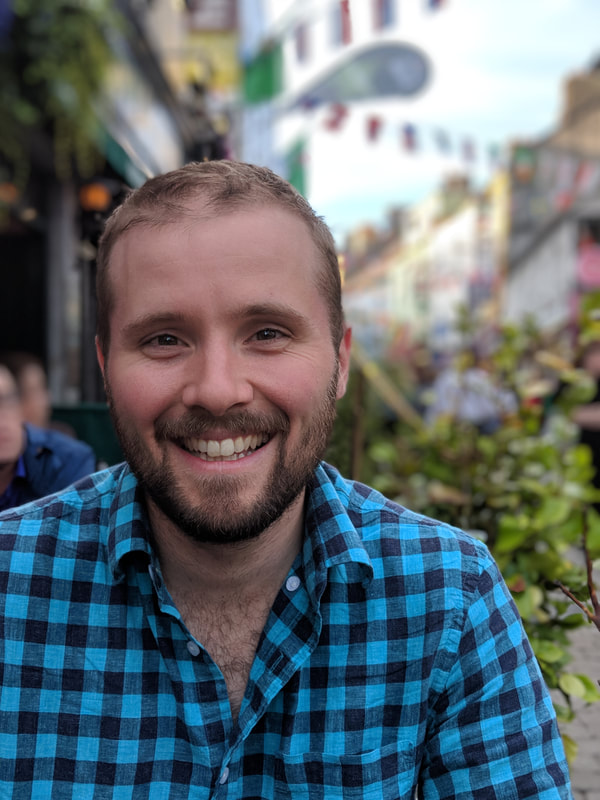
I love building things, tinkering, and creating! Here, I programmed (with LabView) the piezo stage from an optics and instrumentation project to 'sing' my undergrad alma mater fight song. Go Green!
Senior Scientist | R&D Innovation | Microfluidics, Automation, & Biotech
I am an independent, cross-functional scientist with a passion for bridging the gap between hardware engineering, computation, and biology to build the future of medicine—and for inspiring the next generation of scientists to do the same.
Accelerating Drug Discovery at the Intersection of AI and Biology
For over five years, I have been working in biotech R&D at Generate:Biomedicines—a pioneering therapeutics company that uses machine learning and generative biology to create breakthrough medicines on demand. As a Senior Scientist on the Prototyping Labs (Miniaturization) Team, my primary focus is developing novel, automated assays that accelerate the drug development pipeline.
At Generate, we broke from convention to eliminate the traditional barriers between computation and the lab bench. My work lives right in the center of that living feedback loop. I specialize in building applications that leverage novel AI and machine vision for in-the-lab decision-making, high throughput screening, and assay automation in order to meet the demands for data-hungry ML-driven protein design.
Tackling the most pressing challenges in therapeutics requires a deeply multidisciplinary approach. On a daily basis, I work closely with a highly diverse and brilliant team of optical, electronic, mechanical, and software engineers, as well as synthetic and cell biologists, to build technologies that impact everything from early discovery to late-stage biological development.
Building the Tools That Build the Medicines
While the specific therapeutic targets of my current work are proprietary, my technical portfolio spans a wide range of custom instrumentation and assay development. Some example areas of innovation include:
- Microfluidics: Designed, engineered, and built custom microfluidic systems for detecting functional cell responses at high throughput by combining advanced microscopy with cell sorting technologies.
- High-Throughput Screening: Developed a high-throughput microarray-based screening platform, massively scaling our experimental bandwidth and data generation providing program teams with critical liability data at early program timelines.
- Advanced Imaging Assays: Engineered and automated multiple specialized imaging assays to measure binding, cellular internalization, and other critical functional metrics.
- AI-Driven Automation: Integrated machine vision with physical laboratory hardware to create smart, automated workflows and accelerate data analysis.
My work in developing these novel research methods and platforms has led to my co-authorship on several patent applications.
Inspiring the Next Generation with CoLAB
Beyond my work at Generate, I am deeply committed to STEM education and community mentorship. I serve as an active Board Member for CoLAB (High School STEM Career Collaboration), a Watertown-based nonprofit that connects local industry professionals with Watertown High School students to inspire interest and self-confidence in Science, Technology, Engineering, and Math.
Through CoLAB, I actively design and host hands-on physics and biology laboratory modules—such as building telescopes or exploring tissue mechanics—run in-class career exploration sessions, and directly mentor high school students. As Watertown's life science cluster continues to grow, my goal is to ensure local students have the access, skills, and inspiration to be a part of it.
From Experimental Physics to Biotech Innovation
Before shifting to the biotech industry, I spent over 13 years honing my skills as an experimental physicist. I completed my Ph.D. in Physics (with an attachment in Quantitative Biology) at Brandeis University, where I pioneered research in bio-inspired active matter. I followed this with postdoctoral research at Harvard University (Harvard School of Public Health), studying the mechano-bioenergetics of cell migration.
That rigorous academic background trained me to approach complex biological problems with a quantitative physics mindset. It gave me deep expertise in custom experimental hardware, laser optics, fluorescence microscopy, and custom data analysis software.
Today, whether I am engineering the next generation of biotherapeutic screening platforms, teaching hydrogel mechanics to high school students, or programming a piezo stage from an optics project to "sing" my alma mater's fight song, I approach every research problem with an open mind for creative solutions, a collaborative, team-oriented attitude, and a sense of humor.
My postdoc: work with Jeffrey Fredberg at the Harvard School of Public Health applied my training in physics to basic questions in cell mechanics and energy metabolism. During this period, I initiated a project focused on characterizing the metabolic state of cells during collective epithelial cell migration, while simultaneously measuring cell morphology, dynamics, and mechanics. The primary difficulty in this research has been adapting methods in the field of cell metabolism to resolve metabolic properties with single-cell precision in order to measure spatial gradients and explore heterogeneity across dense, confluent epithelial cell layers. Additional obstacles included integrating biological measurements with mechanics measurements such as traction force microscopy. As such, I developed image analysis pipelines to simultaneously extract multiple biophysical indices from microscopy data. This project has resulted in a significant finding that shows cells switch towards glycolytic metabolism during collective epithelial cell unjamming. Furthermore, this work has connected two previously separate fields that I now call Mechano-bioenergetics.
My PhD: I completed my PhD in physics (with an attachment in Quantitative Biology) at Brandeis University with mentorship from Zvonimir Dogic. During this time, I developed bio-inspired materials composed of biological constituents (biopolymers and molecular motors) that were assembled into dynamical systems that display emergent phenomena. Analogous to flocking behavior exhibited by birds, micro-scale cell machinery collectively and autonomously assembles into ordered structures with dynamical and emergent patterns that were previously unpredicted. I developed new experimental methods and heavily applied image analytical tools to characterize these active materials. This project pioneered novel bioengineered materials, spawning a new area of physics in active matter research. Further, I gained expertise in custom experimental instrumentation and hardware including optics such as laser confocal, fluorescence, and polarization-light microscopy and spectroscopy for sample quantification.
Active microtubule bundles spontaneously assemble and form cilia-like beating oscillations.
Boston Soft Matter Socials
During my PhD and Postdoc, I co-founded and led a Boston-based meetup group (Boston Soft Matter Socials) that fostered synergy between researchers with diverse backgrounds ranging from physics, math, engineering, and biology. This meetup group offered a great way to network and connect with the soft matter research community in the Boston area and provided a collegial and stimulating space for discussions in current research challenges for postdocs and graduate students.
Visit our website: Boston Soft Matter Socials